 kulis
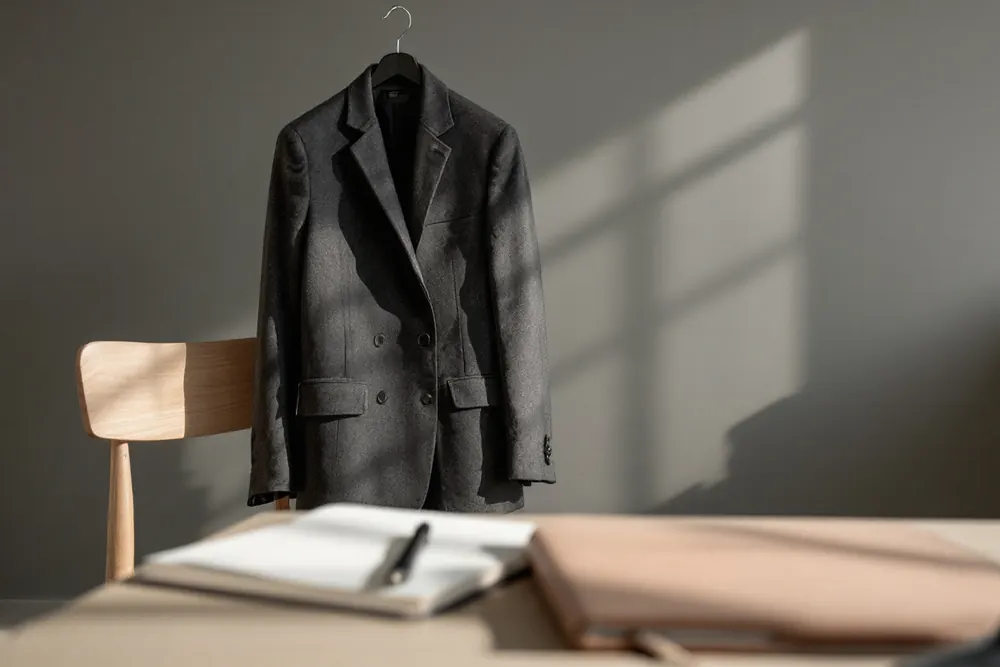
Wear an outfit one step more formal than the company’s everyday dress. For banks, law firms and many government roles that means a dark suit; for most corporate offices, business casual such as tailored trousers, a shirt or blouse and a blazer; for tech, startups and creative jobs, smart casual such as dark jeans or chinos with a shirt or fine knit and clean leather shoes. Navy, charcoal and grey are the safest colours, and whatever you choose should be clean, pressed and comfortable to sit in.
What should you wear to a job interview?
For a job interview, wear an outfit one step more formal than what people at the company wear on an ordinary day. If the team wears jeans and T-shirts, go for dark jeans or chinos with a shirt or fine knit. If they wear business casual, add a blazer. If they wear suits, wear a suit. The interviewer then sees someone who would fit in and has taken the day seriously.
Leaning slightly formal is usually safer than leaning casual. One step up reads as respect for the occasion; two steps can be too far, since a three-piece suit at a small design studio may suggest you have misread the company.
Pick clothes you have worn before and can sit, shake hands and walk in without adjusting anything. Feeling as though you are in costume shows in your posture more than a missing tie ever would.
How do you find out what the company wears?
The quickest way to find out what a company wears is to look at how its own people appear in public. Check the careers page, team photos on the website, LinkedIn posts, event pictures and any office videos. If staff pose in T-shirts, a full suit may feel stiff; if everyone in the pictures wears a jacket, jeans will look underdressed.
If you still cannot tell, ask the recruiter or the person who arranged the interview. A short question such as “Is there a dress code I should know about for the interview?” is common and will not count against you.
Think about the role too. A client-facing sales or advisory position often dresses more formally than an engineering role in the same building, and senior roles usually call for a slightly smarter outfit.
Interview outfits by industry and dress level
Different industries expect different levels of formality, so the right interview outfit for a bank is not the right one for a software startup. Treat the table as a starting point and move up or down a row based on your research.
If you do not own the exact piece, swap in something that does the same job: a smart fine-knit cardigan instead of a blazer, a collared blouse instead of a shirt, dark chinos instead of suit trousers. When the invitation says “smart casual”, our smart casual guide explains where that dress code starts and ends, with outfits for women and men.
For civil service, police, armed forces and other public institutions, read the application guidance and invitation first, as they sometimes set clothing rules. If they say nothing, a dark, plain, classic outfit raises the fewest questions.
| Industry or setting | Dress level | Women | Men |
|---|---|---|---|
| Banking, finance, law, consulting | Business formal | Navy or charcoal trouser suit or skirt suit, white or pale blue blouse, court shoes (pumps) or leather loafers | Navy or charcoal suit, white or pale blue shirt, plain tie, black or dark brown oxford shoes |
| Government, civil service, police, armed forces | Business formal unless the guidance says otherwise | Dark suit, or tailored trousers with a blazer, plain blouse, polished flat or low-heeled shoes | Dark suit, light shirt, plain tie, polished black shoes |
| Corporate office, sales, marketing, HR | Business casual | Tailored trousers or a knee-length skirt, blouse or fine knit, blazer; loafers or low block heels | Wool trousers or chinos, collared shirt, blazer optional, no tie needed; derbies or loafers |
| Tech, software, startups | Smart casual | Dark jeans or tailored trousers, plain knit or shirt, unstructured blazer; loafers or clean leather trainers | Dark jeans or chinos, oxford shirt or fine knit, optional overshirt or blazer; suede derbies or clean leather trainers |
| Creative, design, media, advertising | Smart casual with some personality | Wide-leg trousers or a midi skirt, simple top, one considered piece such as a coloured knit or an interesting jacket; ankle boots or loafers | Chinos or dark jeans, shirt or knit in a richer colour, unstructured jacket; boots or loafers |
| Healthcare, education, charities | Business casual | Tailored trousers or a midi skirt, blouse or cardigan, comfortable closed shoes | Chinos or tailored trousers, collared shirt, optional knit or jacket, leather shoes |
| Retail, hospitality, customer service | Neat casual to business casual | Plain blouse or knit, tailored trousers, or dark jeans if staff wear them, comfortable flats | Shirt or neat polo, chinos, clean leather shoes or plain trainers if staff wear them |
| Manufacturing, warehouse, trades | Neat casual | Clean trousers or dark jeans, plain shirt or knit, sturdy closed shoes | Chinos or dark jeans, polo or shirt, clean boots or closed shoes |
Interview outfits for women
For women, a reliable interview outfit is tailored trousers or a knee-length skirt with a plain blouse or fine knit, a blazer when the setting calls for one, and closed shoes you can walk in. A simple dress with a jacket works just as well.
Outfits to try: for a formal interview, a navy trouser suit, an ivory blouse and black leather loafers. For business casual, charcoal wide-leg trousers, a pale blue shirt, a camel blazer and low block heels. For a smart casual interview, dark straight-leg jeans, a cream merino crewneck, a black unstructured blazer and white leather trainers. For a creative role, a black midi skirt, a forest-green fine knit and brown ankle boots.
Heels are not required for any interview; loafers, ballet flats or a low block heel look just as professional. Keep jewellery simple and carry a structured bag or folder for your CV (résumé), notes and phone. These pieces combine into many interview looks:
- Bottoms: tailored straight or wide-leg trousers, knee-length or midi skirts, very dark jeans for casual workplaces.
- Tops: plain blouses, white or pale blue shirts, fine-knit crewnecks or roll necks, a simple shell top under a jacket.
- Layers: navy, black, grey or camel blazers; a long fine-knit cardigan as a softer alternative.
- Shoes: loafers, ballet flats, low block heels, court shoes (pumps), plain ankle boots in colder months.
Interview outfits for men
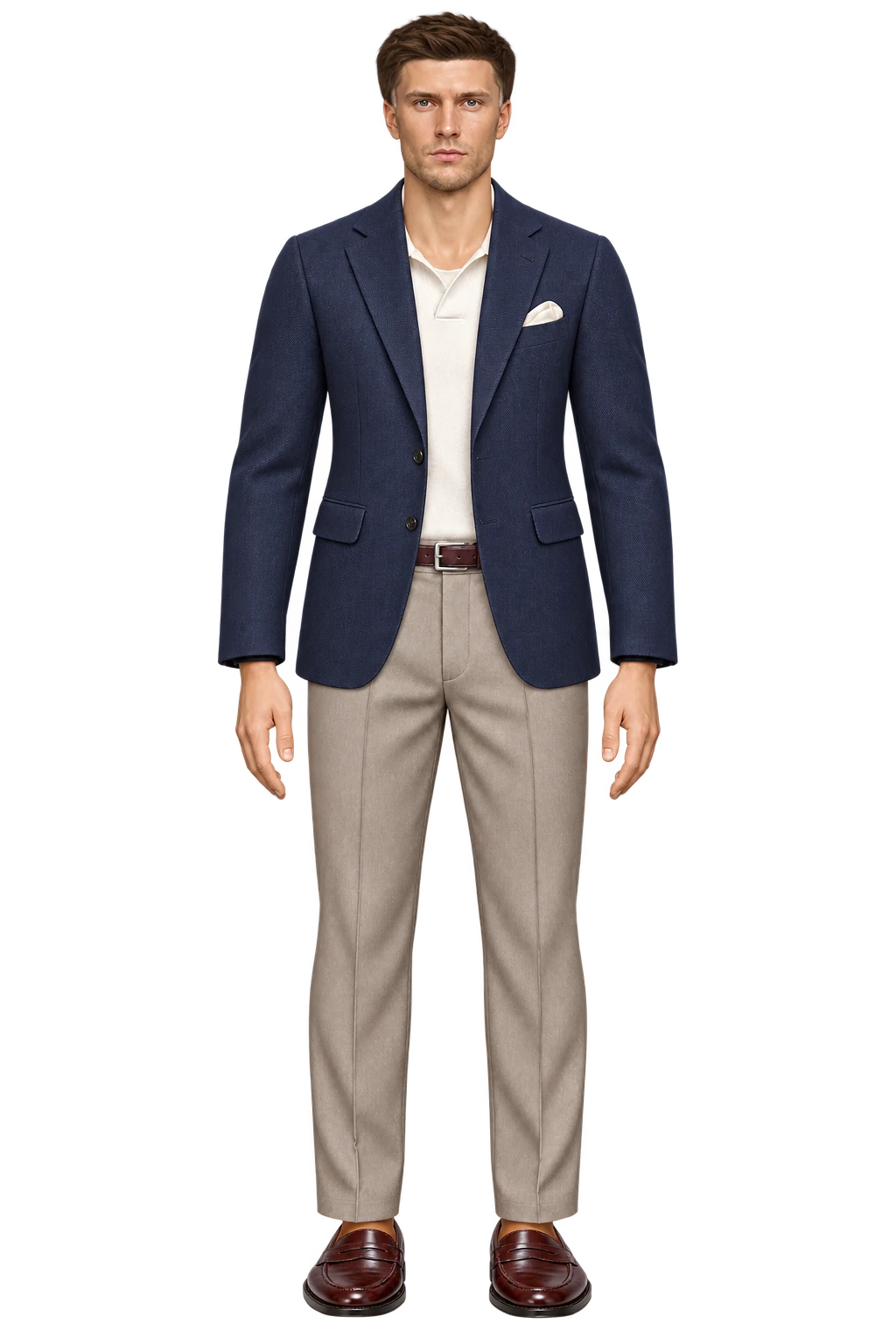
For men, the safest interview outfit is a navy or charcoal suit with a white or pale blue shirt in formal settings, and tailored trousers or chinos with a collared shirt and leather shoes for business casual. In casual workplaces, swap the suit for dark jeans or chinos and a fine knit, and keep the shoes smart.
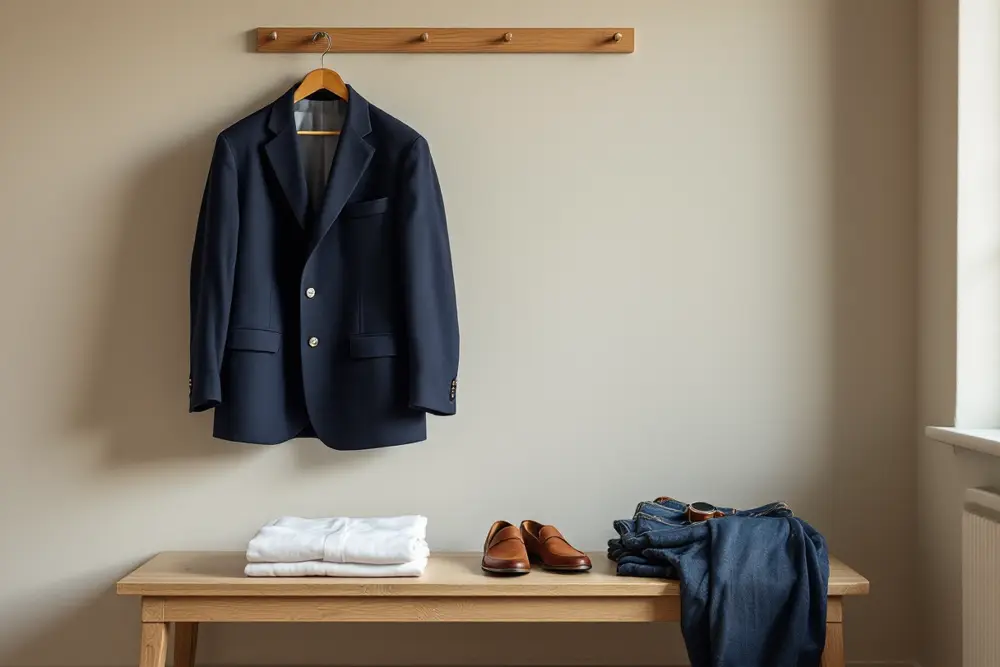
Outfits to try: for a formal interview, a charcoal two-piece suit, a white shirt, a plain navy tie and black oxford shoes. For business casual, grey wool trousers, a pale blue oxford shirt, a navy blazer and brown derbies. For smart casual, dark indigo jeans, a white oxford shirt under a navy merino crewneck and brown suede loafers. For tech or creative roles, olive chinos, a grey knitted polo and white leather trainers.
Do you need a tie? Wear one with a suit for banking, law, government and other formal interviews. For business casual and smart casual it is optional, and an open collar is fine. Match your belt to your shoes and choose dark socks long enough that no skin shows when you sit.
What colour should you wear to a job interview?
Navy, charcoal and mid-grey are the easiest colours to wear to a job interview: they look calm and professional and go with almost everything. White, pale blue and cream are the classic choices for the shirt or blouse underneath.
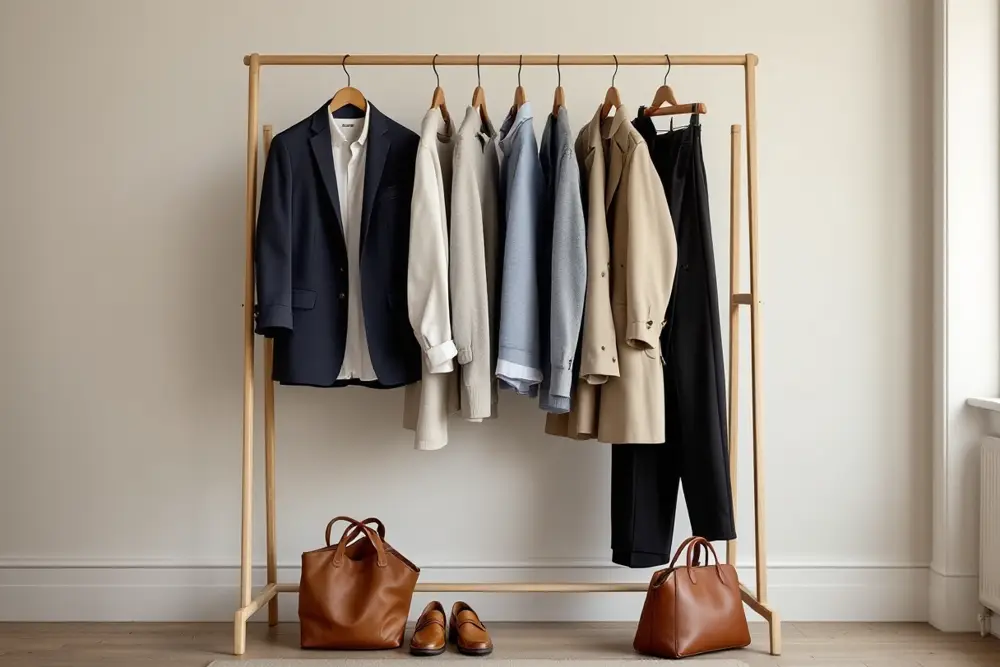
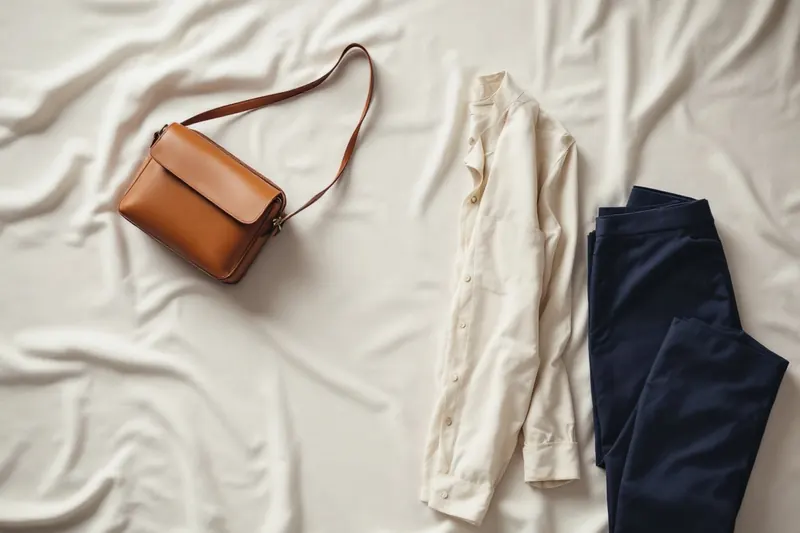
Black is perfectly acceptable, though all black can feel heavy in daylight; a white or cream top lightens it, and our guide to what to wear with black trousers has more pairings. Beige, camel, olive and brown look softer and suit creative, tech and smart casual interviews. Navy trousers with a cream shirt and a tan leather bag work from a corporate office to a design studio.
You do not have to give up colour. A burgundy blouse or a forest-green knit looks good with neutral trousers. What distracts is neon, very busy prints and large logos, which pull the interviewer’s eye away from your face. For more on pairing colours, see how to put together an outfit.
Can you wear a dress, jeans or trainers to an interview?
Yes, you can wear a dress to almost any interview, and jeans or trainers to a casual one, as long as you choose the right versions.
A dress: pick a plain colour, knee-length or just below, with covered shoulders, and add a light jacket for corporate settings, such as a navy shift dress with a grey blazer. Sit down in it beforehand to check how far it rides up. Leave bodycon cuts, shiny fabrics and evening styles for another occasion.
Jeans: wear them only where staff clearly do, as at many tech startups, creative studios and some retail brands. Choose a dark, unripped, straight cut with a shirt, blouse or blazer. If you are unsure, chinos or tailored trousers are safer.
Trainers (sneakers): plain white or single-colour leather trainers with clean soles can work for tech, creative and casual retail interviews; running shoes and chunky or worn-out pairs do not.
What to wear to a video or Zoom interview
For a video interview, dress exactly as you would for the same interview in person, and wear proper trousers or a skirt as well, in case you need to stand up or fetch something during the call.
Solid colours look cleaner on camera than patterns, since fine stripes and small checks can flicker and bright white can glare. Mid-tones such as soft blue, navy, burgundy, teal or grey usually look best. Pick a colour that contrasts with your background: a navy top stands out against a white wall, while a white shirt blends into it.
Necklines matter more than usual because they sit in the centre of the frame, so a shirt collar, a crewneck knit or a simple blouse works well. Keep jewellery quiet, as dangling pieces catch the light or knock against the desk. Ten minutes before, open your camera and check lighting, background and outfit together.
What to wear to an interview in summer
For a summer interview, choose light, breathable fabrics at the same level of formality you would wear the rest of the year: a cotton shirt or blouse, lightweight tailored trousers or a cotton dress, and a jacket you can carry and put on when you arrive.
Leave a few spare minutes to cool down before you go in. Navy, white and small patterns hide perspiration better than pale grey or light blue. Pure linen breathes but creases quickly; a lightweight wool or cotton blend stays neater for formal interviews. Open-toe sandals usually suit only relaxed settings, and men should keep a collared shirt even when the jacket stays off.
Interviewing in cold weather instead? The winter office outfits guide covers layers, coats and boots that also work for an interview in a warm office.
What to wear to your first job interview if you don’t own a suit
If this is your first job interview and you don’t own a suit, you do not need to buy one. A well-ironed plain shirt or blouse, dark tailored trousers or chinos and clean, polished shoes are enough for most entry-level, graduate, internship and part-time interviews.
Build from what you already have. Dark trousers from a school or graduation outfit, a white shirt and a navy knit make a neat combination, and a borrowed blazer that fits can lift it for a formal company. Fit counts for more than price.
For student and part-time interviews at cafés, shops or restaurants, neat casual is usually right: dark jeans or chinos, a plain shirt, polo or knit, and clean shoes. If you are missing basics, the capsule wardrobe essentials checklist shows which versatile pieces to start with.
What not to wear to an interview
Avoid anything that looks unfinished, uncomfortable or better suited to a night out or the gym. Most interview outfit mistakes come from a garment’s condition or fit rather than the garment itself. Leave these at home:
- Creased, stained or faded clothes, including a shirt collar that has lost its shape.
- Ripped or heavily distressed jeans, shorts, leggings, joggers and gym wear.
- Big logos, slogans, neon colours and very busy prints.
- Evening pieces: sequins, satin, very short hems and plunging necklines.
- Flip-flops, beach sandals, worn-out trainers and shoes with scuffed heels.
- Strong perfume or aftershave, which becomes very noticeable in a small meeting room.
- Anything brand new and untested that might pinch, gape or slip while you talk.
Plan your interview outfit the night before
Choose your interview outfit the night before, starting with what you already own. In Kulis you can pick Work under “What’s the plan?”, or describe it in your own words, such as “job interview at a tech startup, smart casual”, and get suggestions from your saved clothes. “Change pieces” lets you compare a blazer with a knit, and “Add to my outfits” keeps the look for next time. Trying it on still tells you how it feels when you sit down.
Once you have chosen, lay everything out, including shoes, bag and coat, and run through this quick check:
- Ironing and stains: look at collars, cuffs and the front of your trousers in good light.
- Sitting test: put the outfit on, sit on a chair and rest your arms on a table to check for pulling, gaping or a rising hem.
- Shoes: cleaned and polished, with heels that are not worn down.
- Bag: big enough for printed copies of your CV, a pen, notes and your phone.
- Backup: a spare shirt, blouse or pair of tights in case of a spill or a ladder.
Frequently asked questions
What is the best thing to wear to a job interview?
Wear an outfit one step more formal than the company’s everyday dress, in a neutral colour and a fit you are comfortable in. For finance and law, that means a navy or charcoal suit. For most offices, tailored trousers, a shirt or blouse and a blazer. For tech and creative roles, dark jeans or chinos with a smart top and clean leather shoes.
Is business casual OK for an interview?
Business casual suits most office interviews, including marketing, HR, sales and education. It usually means tailored trousers or a skirt, a shirt, blouse or fine knit, and leather shoes, with a blazer for a sharper look. For banking, law and some government roles, a suit is safer. Our office outfit ideas show how the same pieces work once you start the job.
Can I wear jeans to a job interview?
Wear jeans to an interview only when you know the company dresses casually, as many tech startups, creative studios and some retailers do. Choose dark, unripped denim in a straight cut and pair it with a shirt, blouse, fine knit or blazer. If you cannot confirm the dress code, chinos or tailored trousers rarely look out of place.
Should I wear a suit to an interview?
Wear a suit if the people doing the job normally wear one, which is common in banking, law, consulting, senior corporate roles and many government positions. In business casual offices, a blazer with trousers is enough, and at tech startups or creative agencies a full suit can feel too formal. If a suit helps you feel confident for a smart casual interview, wear it without the tie.
Do men need to wear a tie to an interview?
A tie is expected with a suit in formal fields such as finance, law and government. For business casual and smart casual interviews it is optional, and a well-ironed collared shirt with the top button undone looks right. If you are unsure, carry a plain tie in your bag and put it on once you see how people there are dressed.
What should I wear to a Zoom interview?
Wear the same outfit you would choose for the interview in person, including trousers or a skirt. Solid mid-tone colours such as navy, soft blue, burgundy or grey look best on camera, while fine stripes and small checks can flicker. Choose a top that contrasts with your background, keep jewellery minimal, and check your camera, lighting and outfit together a few minutes before the call.
What should I wear to an interview if I don’t have a suit?
Without a suit, wear dark tailored trousers or chinos, a well-ironed plain shirt or blouse and clean leather shoes. Add a navy knit or a borrowed blazer that fits if the company is more formal. This is accepted at most entry-level, graduate and part-time interviews, where fit and condition matter far more than a matching suit.
Adapt these starting ideas to your plans, comfort and personal style.
Get Kulis