 kulis
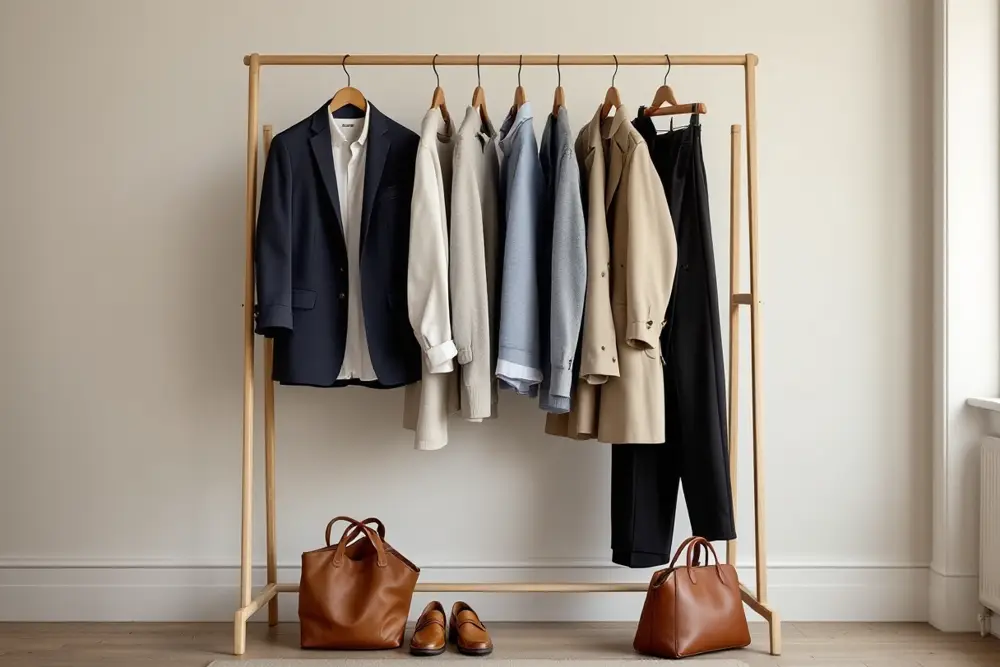
Capsule wardrobe essentials are about 22 to 26 pieces that all work together: 8 to 11 tops, 4 to 5 bottoms, a jacket, a light outer layer, a seasonal coat, 3 to 4 pairs of shoes and two bags or belts. Women may add a skirt and one or two dresses. Choose one dark neutral, one light neutral and no more than two accent colours. Write a shopping list only after checking the checklist against what you already own.
What is a capsule wardrobe?
A capsule wardrobe is a small set of essential pieces that combine easily with each other, chosen from the clothes you actually wear in a given season. This guide is the practical half of the idea: a capsule wardrobe checklist with counts for women and men, plus shoes, colours and seasonal swaps.
The term appeared in American fashion writing as early as the 1940s. In the 1970s, London boutique owner Susie Faux revived it for a few timeless basics topped up with new pieces each season, and in 1985 Donna Karan's Seven Easy Pieces, a small interchangeable collection for working women, became one of its best-known examples.
For the process of sorting what you own and planning around a real week, read how to build a capsule wardrobe. This page tells you what each row of the list should hold.
How many pieces should a capsule wardrobe have?
There is no single right number, but 25 to 40 pieces per season, shoes included, works comfortably for most people. Your routine sets the figure: someone in an office five days a week needs different things from someone who works from home.
The best-known rule is Project 333, started by Courtney Carver in 2010: you wear 33 items for three months, counting clothes, outerwear, shoes, accessories and jewellery. Underwear, sleepwear, loungewear, exercise-only clothes and sentimental jewellery you never take off are not counted. Everything else is boxed up and reviewed after three months, and Carver encourages people to adapt the rules.
Susie Faux's core list for women was shorter still: two pairs of trousers, a dress or skirt, a jacket, a coat, a knit, two pairs of shoes and two bags. The checklists below sit between those two ends, with a range on each row so you can adjust them.
Women's capsule wardrobe checklist
A women's capsule wardrobe comes to about 22 to 24 pieces before accessories: 8 tops, 4 to 5 bottoms, 1 to 2 dresses, 3 outer layers, 4 pairs of shoes and 2 bags. The colours in the table are examples; swap them for your own palette.
No skirts or dresses? Swap those rows for another pair of trousers and a top. If you prefer more coverage, the same logic works with longer shirts or tunics, wide-leg trousers, maxi skirts and a few plain scarves in your palette.
| Piece | How many | Colour and fabric ideas |
|---|---|---|
| Plain T-shirt or vest top | 3 | White, black or navy, grey marl; heavier-weight cotton |
| Shirt or blouse | 2 | White cotton poplin shirt, cream or pale blue blouse |
| Fine knit | 2 | Cream or grey crew neck, plus one in a dark colour |
| Cardigan | 1 | Beige, camel or navy; buttoned, plain knit |
| Jeans | 1–2 | Dark indigo straight leg; a light-blue second pair if you like |
| Tailored trousers | 2 | Black or navy straight leg, beige or grey wide leg |
| Skirt | 1 | Plain midi in crepe, knit or pleats |
| Dress | 1–2 | Plain midi dress in fine knit or viscose |
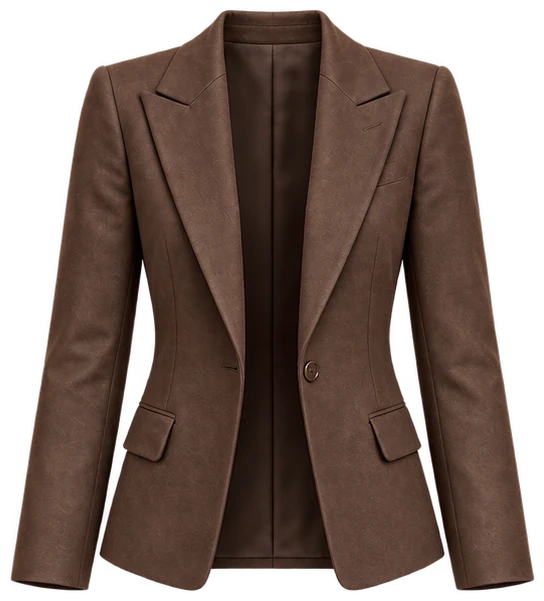
| Blazer | 1 | Navy, black or camel; hip length |
| Light outer layer | 1 | Beige trench coat or denim jacket |
| Coat | 1 | For the season: wool coat, puffer or raincoat |
| Shoes | 4 | White leather trainers, loafers or ballet flats, ankle boots, sandals in summer |
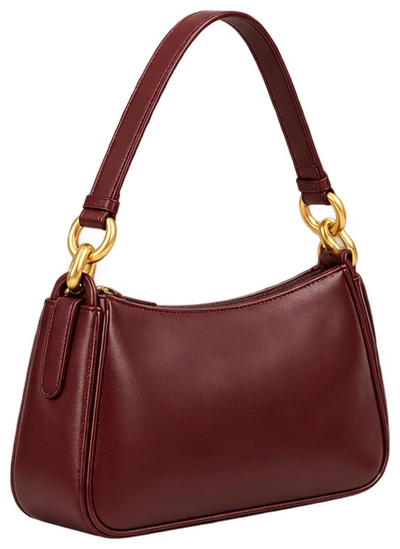
| Bags | 2 | Everyday tote or shoulder bag, small evening bag |
Men's capsule wardrobe checklist
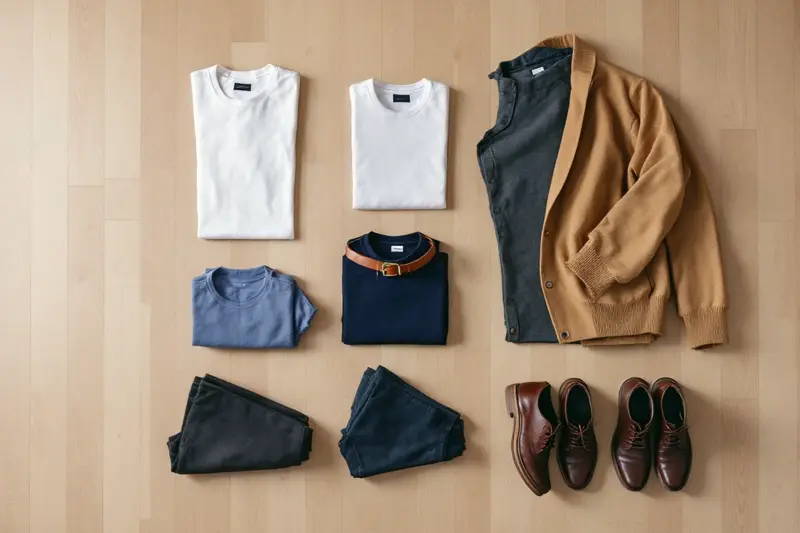
A men's capsule wardrobe comes to about 22 to 25 pieces before accessories: 10 to 11 tops, 4 to 5 bottoms, 3 outer layers, 3 to 4 pairs of shoes and two belts. Shirts, chinos and fine knits do most of the work, and when those three go together the same pieces cover weekdays and weekends.
Add a suit only if your job or an upcoming wedding calls for one. A navy suit is the most useful, because the jacket works with chinos and the trousers with a knit, so it counts as two working pieces.
| Piece | How many | Colour and fabric ideas |
|---|---|---|
| Plain T-shirt | 3 | White, navy, grey marl; heavier-weight cotton |
| Polo shirt | 1–2 | Navy or white cotton piqué |
| Shirt | 3 | White oxford, pale blue, one fine stripe or linen |
| Fine knit | 2 | Navy merino crew neck, cream or grey half-zip |
| Sweatshirt or cardigan | 1 | Grey marl sweatshirt or navy cardigan |
| Jeans | 1–2 | Dark indigo, straight cut |
| Chinos | 2 | Stone, plus olive or navy |
| Tailored trousers | 1 | Grey or charcoal wool blend |
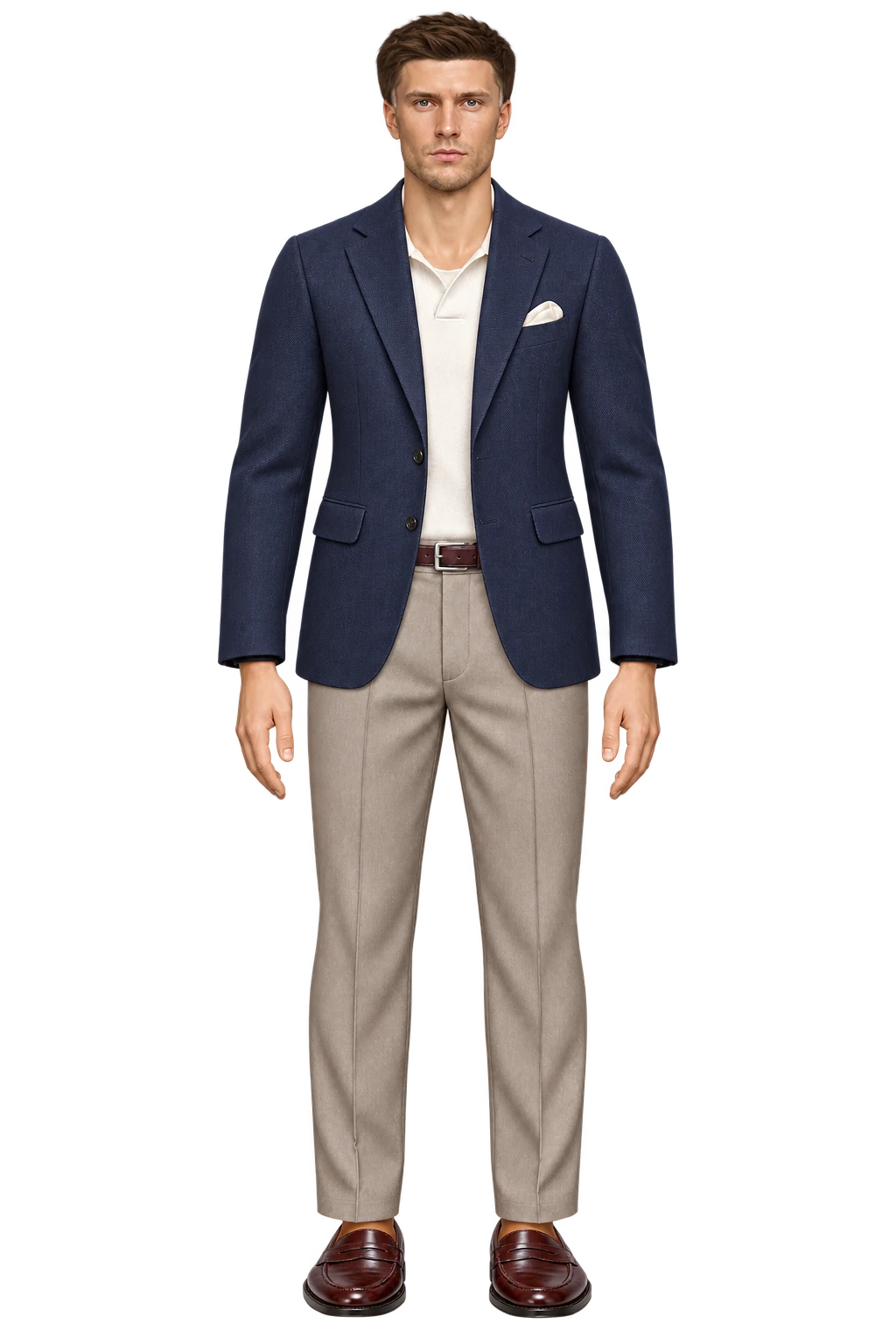
| Blazer | 1 | Navy, lightly lined, soft shoulder |
| Light outer layer | 1 | Denim jacket, overshirt or bomber |
| Coat | 1 | Navy or camel overcoat, puffer in deep winter |
| Shoes | 3–4 | White leather trainers, brown suede boots, loafers or derbies, espadrilles in summer |
| Belts | 2 | Brown and black leather |
How many shoes do you need in a capsule wardrobe?
Three or four pairs per season are enough for most capsule wardrobes: everyday trainers, a smarter flat shoe, a boot, and sandals or a waterproof pair depending on the season. Choose by how much you walk first, then by palette. If you wear both brown and black leather, keep a belt and a bag in each.
Accessories take up little space but change how the same outfit reads. A scarf, a watch, sunglasses and a little everyday jewellery are enough to start; whether you count them in your total is up to you.
- For women: white leather trainers (sneakers), black or tan loafers or ballet flats, black or brown ankle boots, simple strappy sandals in summer.
- For men: white leather trainers, brown suede Chelsea boots, brown loafers or derbies, espadrilles or leather sandals in summer.
- Bags: an everyday tote or shoulder bag plus a small evening bag; for men, a backpack or briefcase.
- Seasonal accessories: scarf, hat and gloves in winter; sunglasses and a straw hat in summer.
How do you choose a capsule wardrobe colour palette?
A capsule wardrobe colour palette has one dark neutral as its base, one or two light neutrals and no more than two accent colours. The dark neutral goes into trousers and outerwear, the light neutrals into tops, and the accent shows up in a knit, a scarf or a shirt. That way almost every top works with almost every bottom.
To choose the base, look at what you already own: the dark colour most of your trousers and coats share becomes the base. Black and navy, or brown and black, can share a wardrobe if you plan shoes and belts around both. Pick accent colours you feel comfortable in. If you like prints, make sure at least one colour in each print belongs to your palette.
| Palette | Dark neutral | Light neutrals | Accent |
|---|---|---|---|
| Classic | Navy | White, grey | Burgundy |
| Warm | Brown | Cream, beige | Olive, terracotta |
| High contrast | Black | White, grey marl | Red or cobalt blue |
| Soft | Charcoal | Stone, ecru | Dusty pink, pale blue |
What to add for a winter or summer capsule wardrobe
Most of the core list stays the same all year; only 6 to 10 pieces rotate when the season changes, mainly outerwear, fabric weight and footwear. Jeans, a white shirt, fine knits and white trainers work in most months. For cold workdays, see winter office outfits.
Store off-season pieces in labelled boxes or vacuum bags. Next season, notice which pieces you missed and which you had forgotten; that tells you what to cut.
- Add for winter: a wool coat or puffer, 1–2 heavier knits (roll neck or cable knit), long-sleeved thermal or cotton tops, wool-blend trousers, waterproof boots, scarf, hat and gloves.
- Put away in winter: linen shirts, shorts, thin dresses, sandals and espadrilles.
- Add for summer: 1–2 linen shirts, a strappy or short-sleeved midi dress for women, 1–2 pairs of chino or linen shorts for men, sandals or espadrilles, sunglasses.
- Put away in summer: heavy knits, coats, boots and wool trousers.
- Keep out between seasons: a trench coat or denim jacket, a cardigan, fine knits and light closed-toe shoes.
How does the list change for office work, study or working from home?
The list shifts towards whatever you wear on most days of the week: raise the count in that category and drop rarely needed pieces to one or two. The total does not have to grow; pieces simply move between categories.
For work combinations, see office outfit ideas, and if your workplace sits between formal and relaxed, read what smart casual means. Working from home, a tidy top half for video calls is often enough.
| Your routine | Add more | Cut back | Example outfit |
|---|---|---|---|
| Office-based | Shirts or blouses 4–5, tailored trousers 3, blazers 1–2 | Sweatshirts and sporty tops to 1 | Navy blazer, white shirt, grey trousers, brown loafers |
| Student | T-shirts and sweatshirts 4–5, jeans 2, comfortable trainers 2, a backpack | Blazer to 1, tailored trousers to 1 | Grey sweatshirt, dark jeans, denim jacket, white trainers |
| Working from home | Fine knits, polos or plain T-shirts 4–5, soft tailored or jersey trousers 2 | Shoes to 2–3, formal pieces to 1 | Cream fine knit, navy jersey trousers; a cardigan for calls |
| Hybrid | Pieces that work in the office and outside it: chinos, fine knits, loafers | Pieces that suit only one setting | Navy knit, stone chinos, white leather trainers |
How many outfits can you make from a few pieces?
The number of outfits is roughly the number of tops multiplied by the number of bottoms; if the colours work together, 5 tops and 3 bottoms give 15 pairings. Two pairs of shoes double that to 30. Wearing a jacket or leaving it off doubles it again, to 60 in theory.
Example: a white T-shirt, a grey T-shirt, a pale blue shirt, a cream knit and a navy knit (5 tops); dark jeans, black trousers and stone chinos or a skirt (3 bottoms); white trainers and brown loafers (2 pairs of shoes). 5 × 3 × 2 = 30 outfits. A few will not feel like you, so treat the figure as a ceiling.
The maths is most useful for choosing your next piece. Here, one more top gives 6 × 3 × 2 = 36 outfits, while one more bottom gives 5 × 4 × 2 = 40: a piece added to the smallest category usually opens up the most combinations. For balancing proportion, colour and texture, see how to put together an outfit.
How do you find the gaps in your wardrobe?
The easiest way to find your gaps is to print or copy one of the tables above and write, next to each row, how many pieces you own and have actually worn in the last three months. Pieces that hang there unworn do not count.
Let pieces that do the same job stand in for each other. A navy cardigan can replace a blazer on some days, and a plain knit dress can cover the skirt and top rows.
- Mark each row: done, missing or too many.
- Move the least-worn pieces from too-many rows into a box; you do not have to get rid of them yet.
- Rank the missing rows by the outfit maths: the piece that opens the most new pairings goes first.
- Limit your gap list to three pieces, and write down three outfits each one would join.
- Wear the capsule for three or four weeks, then delete rows you never missed and add the piece you kept reaching for.
What not to include in a capsule wardrobe
At first, leave out anything that only works with one outfit or one occasion. These pieces are easier to add once the essentials are settled; nothing here is banned, it just does not belong on your first gap list.
Special-occasion clothes, such as a wedding guest outfit, can sit in a small separate section, counted or not as you prefer.
- Colours and prints outside your palette that appeal mainly because they are everywhere this season.
- Any top or bottom that does not go with at least three pieces you own.
- Clothes that do not fit you now and are being kept for later.
- Fabrics you do not have time to care for, such as shirts that need ironing after every wear.
- A duplicate of something you already have, such as a fourth black T-shirt.
- Shoes that look great but hurt when you walk.
- Anything that went into the basket only because it was on sale.
Use the checklist with your own wardrobe in view
This checklist works best when you can see your own clothes while you use it. Photographing your pieces and gathering them in a digital wardrobe shows at a glance which rows are filled and which are empty.
In Kulis you can build a digital wardrobe from photos of your clothes, or start with the free sample women's and men's catalogue of basics. Outfit suggestions come from the pieces you have saved, and Add to my outfits keeps the looks you like, so you can see how many combinations your capsule really gives you.
Frequently asked questions
How many pieces should be in a capsule wardrobe?
There is no fixed number, but 25 to 40 pieces per season, shoes included, suits most people. Project 333 suggests 33 items for three months, counting clothes, outerwear, shoes, accessories and jewellery but not underwear, sleepwear, loungewear or exercise clothes. Raise or lower the number to fit your routine, your climate and how often you do laundry.
What are the essentials of a capsule wardrobe?
The core is 3 plain T-shirts, 2 shirts or blouses, 2 fine knits, a cardigan or sweatshirt, 1–2 pairs of jeans, 2 pairs of tailored trousers or chinos, a blazer, a light outer layer, a seasonal coat and 3–4 pairs of shoes. Women may add a skirt and a dress; men may add a polo and another shirt. Keeping colours to one dark neutral, one light neutral and one or two accents makes everything combine.
What should be in a women's capsule wardrobe?
A women's capsule wardrobe usually holds about 22 to 24 pieces: three plain T-shirts, a white shirt and a blouse, two fine knits, a cardigan, dark straight-leg jeans, two pairs of tailored trousers, a midi skirt, one or two plain midi dresses, a blazer, a trench coat or denim jacket and a seasonal coat. White leather trainers, loafers or ballet flats, ankle boots and summer sandals cover most days.
What should be in a men's capsule wardrobe?
The core of a men's capsule wardrobe is a white oxford and a pale blue shirt, white, navy and grey T-shirts, a navy merino knit, dark jeans, stone and navy or olive chinos, grey tailored trousers and a navy blazer. A denim jacket or overshirt and an overcoat cover outerwear. White leather trainers, brown suede boots and loafers or derbies suit most situations, with one brown and one black leather belt.
Do you need to buy new clothes for a capsule wardrobe?
No. Most of a capsule wardrobe usually comes from clothes you already own. Compare the checklist with your wardrobe, count what you have worn in the last three months and note only the rows that are genuinely empty. Keeping the gap list to three pieces, each with outfits it would join, helps you avoid buying things you will not wear.
Should the base colour of a capsule wardrobe be black or navy?
Use whichever dark colour most of your trousers and outerwear already share. Black gives sharper contrast and works well with white, grey and red. Navy is a little softer and pairs easily with white, cream, beige and burgundy. You can use both; in that case, decide in advance whether your shoes, belts and bags will be brown or black.
How often should you update a capsule wardrobe?
Most people update a capsule wardrobe at each change of season, or at least between summer and winter; Project 333 also runs in three-month cycles. Usually 6 to 10 pieces rotate, as heavy knits, coats and boots make way for linen shirts, sandals and light dresses. Replace a worn-out piece whenever you need to.
Adapt these starting ideas to your plans, comfort and personal style.
Get Kulis