 kulis
As a rough guide: above 25°C (77°F) wear light, breathable single layers; at 20–25°C (68–77°F) a T-shirt or light shirt with a layer for the evening; at 15–20°C (59–68°F) long sleeves with a denim jacket, blazer or light trench; at 10–15°C (50–59°F) a knit with a trench, leather jacket or light padded jacket; at 5–10°C (41–50°F) a sweater and a wool coat; below 5°C (41°F) a heavy coat, scarf, gloves and boots. If it is windy, wet or you will be out until evening, dress one band colder.
What to wear by temperature: the quick chart
The simplest way to decide what to wear by temperature is to match the day's “feels like” reading to a band, then choose a top, an outer layer, and trousers and shoes for that band. The chart below covers everyday outdoor clothing from hot days to below freezing, in both Celsius and Fahrenheit. The logic is the same for women and men; only the cut of the pieces changes.
Treat it as a starting point for an average day. If you tend to feel the cold, read one row further down; if you warm up quickly or will be walking fast, read one row up. After a week or two you will know which row suits you.
Check the unit before you trust any advice about “15 degree weather”. 15°C is 59°F, a mild light-jacket day, while 15°F is about −9°C and calls for full winter clothing. Every band in this guide is given in both units.
| Temperature | Tops | Outer layer | Bottoms and shoes |
|---|---|---|---|
| Above 25°C (77°F) | Thin T-shirt, linen shirt, vest top, short-sleeved dress | None; a thin shirt or cardigan for air-conditioned rooms | Shorts, linen trousers, light skirts; sandals, canvas trainers |
| 20–25°C (68–77°F) | T-shirt, thin shirt, polo, light blouse | Denim jacket or overshirt for the evening | Jeans, chinos, midi skirt; trainers, loafers |
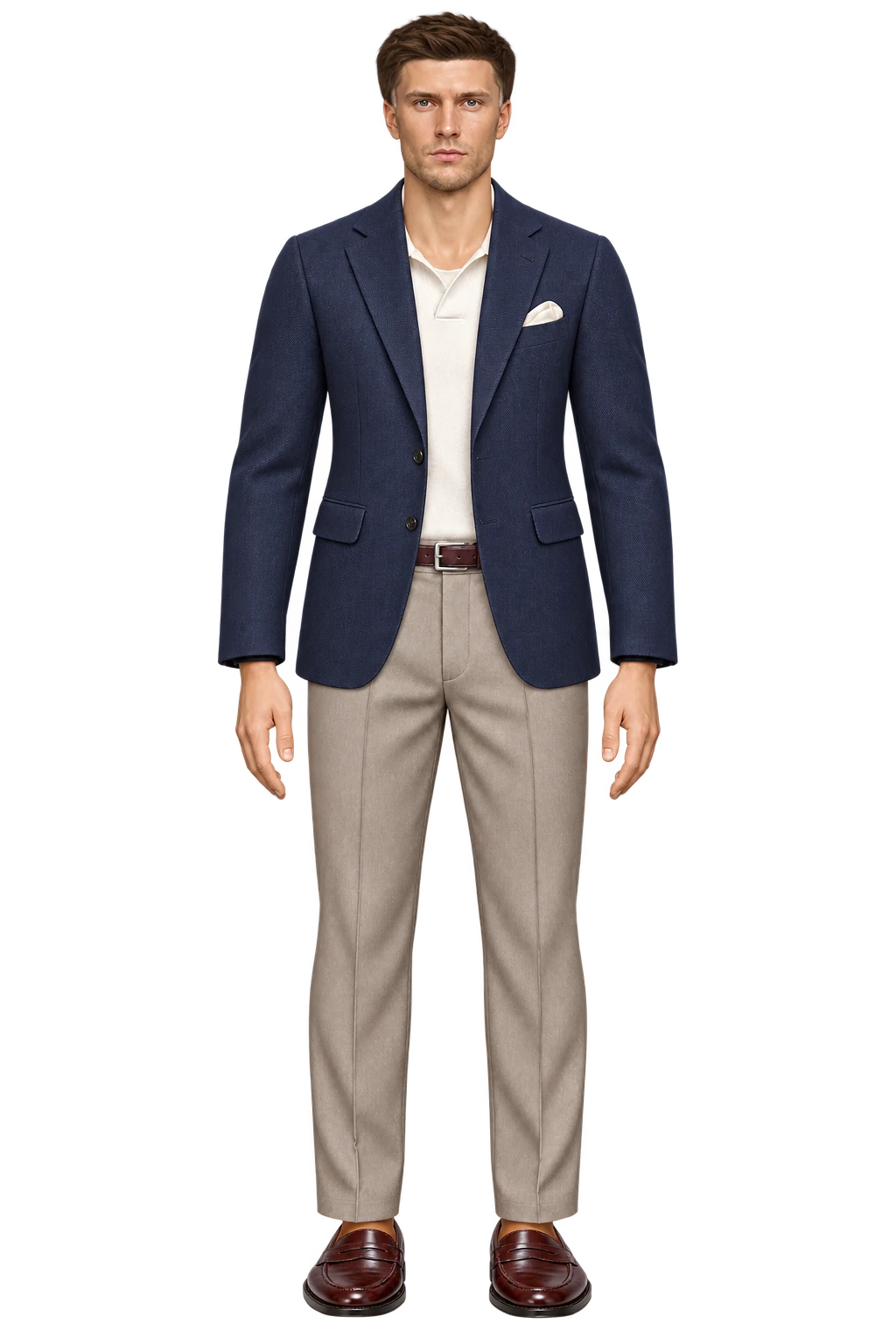
| 15–20°C (59–68°F) | Long-sleeved top, shirt, fine knit | Denim jacket, blazer, light trench, overshirt | Jeans, chinos, tailored trousers; trainers, loafers |
| 10–15°C (50–59°F) | Knit, sweatshirt, heavier shirt | Trench coat, leather jacket, light padded jacket | Heavier jeans, wool-blend trousers; ankle boots, closed shoes |
| 5–10°C (41–50°F) | Sweater, or a knit over a T-shirt | Wool coat, padded jacket | Thick trousers, skirt with opaque tights; boots |
| 0–5°C (32–41°F) | Thin long-sleeved base under a sweater | Heavy wool coat or down jacket; scarf, hat, gloves | Thick trousers; waterproof boots with warm socks |
| Below 0°C (32°F) | Thermal base layer, thick knit | Insulated or down coat, ideally hooded; scarf, hat, gloves | Thermal leggings under trousers; insulated boots with a grippy sole |
What to wear when it's above 25°C (77°F)
Above 25°C (77°F), wear single, loose layers in breathable fabrics such as linen, cotton and lightweight viscose, and choose lighter colours if you will be in direct sun. Air needs to move around your body, so a looser cut usually feels cooler than a close-fitting one.
Women might wear a cotton midi dress with flat leather sandals, or wide linen trousers with a vest top or a short-sleeved shirt. Men might pair linen-blend shorts or light chinos with a white T-shirt or a short-sleeved camp-collar shirt and canvas trainers. Keep a thin shirt or cardigan in your bag if you are heading somewhere with strong air conditioning, such as an office, a cinema or a long train journey.
Strong sun matters more than the exact number at this end of the chart. A hat and sunglasses help, and a loose linen shirt over your shoulders can feel cooler than bare skin in the midday sun.
What to wear in 20 degree weather (20–25°C / 68–77°F)
At 20–25°C (68–77°F), a T-shirt or light shirt with jeans or chinos is comfortable for most people during the day, with a light layer ready for the evening. This band also answers the question of what to wear in 70 degree weather, since 70°F is about 21°C.
Shorts and short sleeves are fine for many people at 20°C in the sun. In the shade, on a breezy day or after sunset, the same temperature can feel cool, so a denim jacket, overshirt or thin cardigan earns its place in your bag.
- Women: white T-shirt, straight-leg jeans, a denim jacket over the shoulders and white leather trainers.
- Women: a cotton shirt dress, or a satin midi skirt with a fitted T-shirt, and loafers or flat sandals.
- Men: navy polo shirt, stone chinos and white trainers, with a light overshirt for later.
- Men: a short-sleeved linen-cotton shirt, mid-blue jeans and suede loafers.
What to wear in 15 degree weather (15–20°C / 59–68°F)
At 15–20°C (59–68°F), wear long sleeves with a light outer layer you can carry: a denim jacket, blazer, light trench or overshirt. This is also the answer for 60 degree weather, since 60°F is about 16°C.
This band is often the trickiest, because mornings feel cool and early afternoons can feel warm. Two thin layers work better than one thick one. A T-shirt under an open shirt, a fine knit under a denim jacket, or a long-sleeved top under a blazer lets you add or remove warmth as the day changes.
Women might wear a midi dress with a thin cardigan or denim jacket and ankle boots or loafers, or straight jeans with a striped long-sleeved top and a light trench. Men might wear a polo or Oxford shirt under a cotton overshirt with chinos and suede desert boots, or a fine merino crewneck with dark jeans and trainers. Choose an outer layer that folds into a bag; carrying a stiff jacket in your hand all afternoon is no fun.
If you want help balancing the layers themselves, the basics of colour, proportion and layering are in how to put together an outfit.
What to wear in 10 degree weather (10–15°C / 50–59°F)
At 10–15°C (50–59°F), wear a knit or sweatshirt under a trench coat, leather jacket or light padded jacket, with full-length trousers and closed shoes. This covers 50 degree weather too: 50°F is exactly 10°C, so it sits at the cool end of this band.
Do you need a coat at 10 degrees? Not necessarily. On a dry, still day when you are only outside for short stretches, a knit with a trench or leather jacket is usually enough. If you will be waiting at a bus stop, walking by the water or staying out late, a light padded jacket or wool coat is the better choice. A heavy winter coat is usually too much here and can feel warm as soon as you walk briskly.
A T-shirt on its own is too cool for most people at 10°C, but it works well as the first layer under a knit. Ankle boots look natural at this temperature, and closed trainers are fine on a dry day.
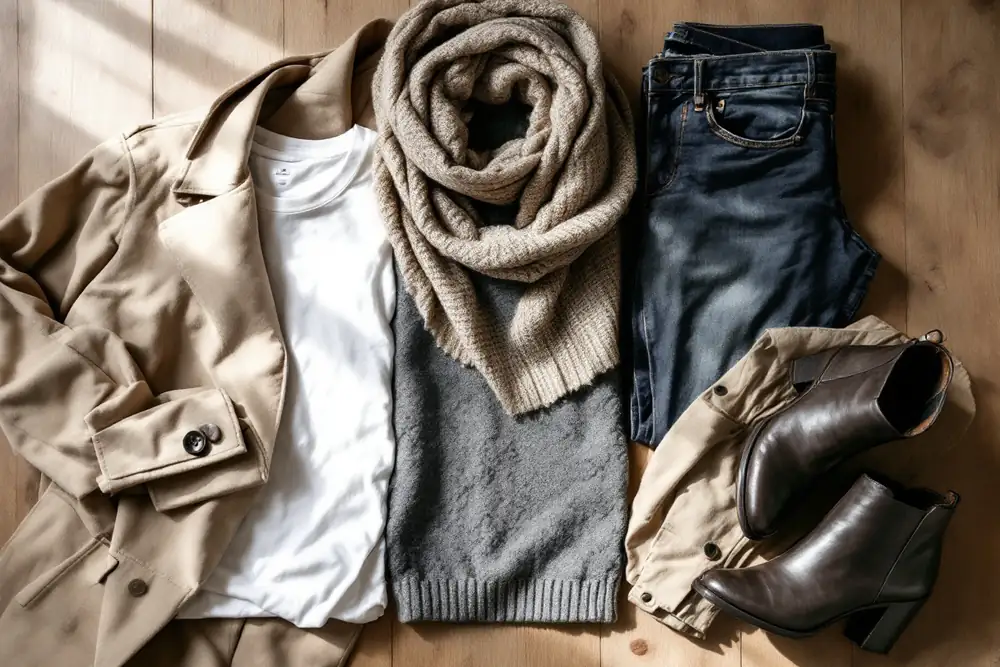
- Women: grey crewneck knit, dark straight jeans, beige trench coat and brown leather ankle boots.
- Women: knitted midi dress, opaque tights, a short leather jacket and loafers.
- Men: navy merino crewneck, grey wool-blend trousers, a tan suede jacket and brown Chelsea boots.
- Men: ecru sweatshirt over a white T-shirt, dark jeans, a light quilted jacket and leather trainers.
What to wear in 5 degree weather (5–10°C / 41–50°F)
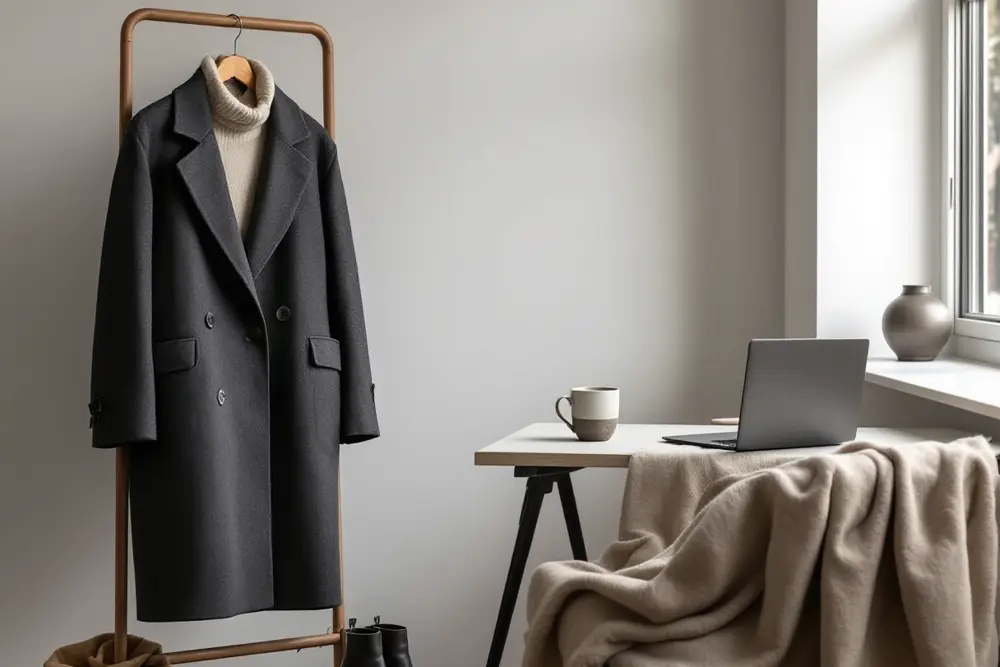
At 5–10°C (41–50°F), wear a proper sweater and a warm outer layer, such as a wool coat or padded jacket, with thicker trousers and boots. This is where a coat stops being optional for most people, especially in the morning and after dark.
Wool and wool blends are the most useful fabrics in this band because they stay warm even when the air is damp. A scarf adds a lot of warmth for very little bulk and comes off easily indoors.
Women might wear a camel wool coat over a roll-neck knit with wide-leg wool trousers and leather boots, or a corduroy skirt with 60 denier tights and knee-high boots. Men might wear a charcoal wool overcoat or a navy padded jacket over a lambswool sweater, with heavier chinos or flannel trousers and leather boots. For working days at this temperature, winter office outfits covers coats, knits and boots in more detail.
What to wear in 0–5°C (32–41°F) and below freezing
From 0 to 5°C (32–41°F), dress in three layers: a thin long-sleeved base, a sweater or fleece, and a heavy wool coat or down jacket, plus a scarf, hat and gloves. Waterproof boots with warm socks matter more than usual, because cold feet make the whole outfit feel colder.
Below 0°C (32°F), switch the base layer to a thermal one, consider thermal leggings under your trousers, and choose an insulated coat that covers your hips, ideally with a hood. Boots with a grippy sole help on icy pavements. Women can keep wearing skirts and dresses with thermal tights and tall boots; men may find a down jacket over a merino base and a thick knit warmer than a tailored coat on the coldest days.
Keep the layer closest to your skin thin and breathable. Heavy cotton holds on to sweat, so if you warm up on a walk and then stand still, you can feel chilled quickly.
How wind, rain and sun change what you should wear
Wind, rain and sun can make the same temperature feel several degrees warmer or colder, so dress for the “feels like” figure in your forecast rather than the air temperature alone. The feels-like reading, also called apparent temperature, combines the air temperature with wind and, in hot weather, humidity.
The same 12°C (54°F) can be a light-jacket day at a sunny, sheltered lunchtime and a proper-coat day on a windy seafront or in the rain.
- Wind: a windproof outer layer, such as a tightly woven trench, a waxed or technical shell, or a dense wool coat, does more than an extra-thick knit. On a windy day, dress one band colder.
- Rain: a water-resistant trench or hooded jacket over a light knit handles most wet days between 10 and 15°C (50–59°F). Leave suede shoes and floor-length hems at home, and choose leather boots or rubber-soled shoes.
- Sun: direct sun can make 15°C (59°F) feel like a T-shirt day, while the same temperature on an overcast afternoon needs a jacket.
- Humidity: damp cold feels sharper than dry cold, and humid heat feels heavier. In both cases wool, linen and cotton tend to feel more comfortable than heavy synthetics.
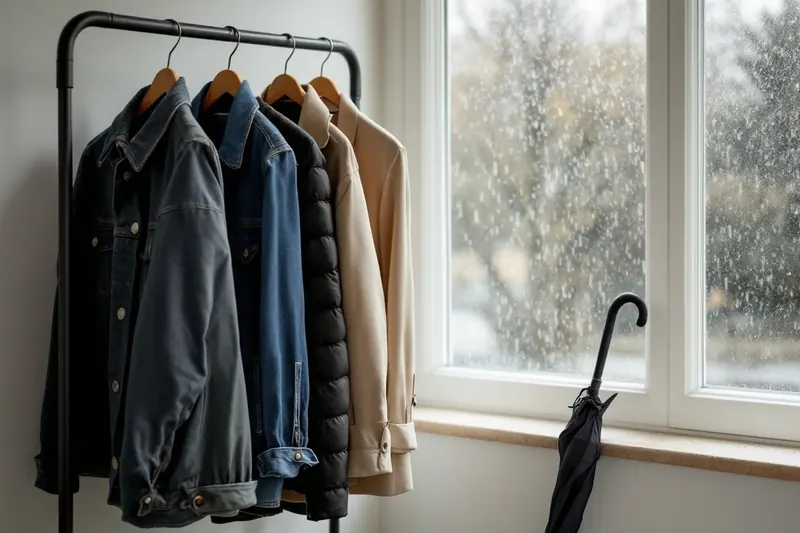
How to dress when the temperature changes during the day
When the morning, afternoon and evening fall into different bands, dress for the coldest part of the day you will spend outside and build the outfit from layers you can remove. A day that starts at 8°C (46°F) and peaks at 18°C (64°F) needs a removable layer, not a compromise halfway between the two.
Check the forecast for the time you will be heading home, not only the time you leave. Then think about where you will spend the day. Public transport, shops and offices are often warmer than the street, so a thin knit under a coat you can hang up is easier to live with than a chunky sweater you cannot take off. For a working week, office outfit ideas shows how shirts, knits and blazers combine.
- Base: something you are comfortable wearing on its own indoors, such as a T-shirt, shirt or fine knit.
- Middle: a cardigan, overshirt, blazer or light sweater you can take off and carry.
- Outer: the piece that does the work outside, from a denim jacket to a down coat, and comes off at the door.
Do you need to change your whole wardrobe between seasons?
No. In the transition months you can keep most summer pieces in use by layering them, and put away only the clothes that work solely in the heat. T-shirts become base layers, thin shirts go under knits, and midi skirts and dresses carry on into colder weather with opaque tights and boots.
The pieces that usually go into storage first are sandals, shorts and very sheer fabrics. A small set of versatile layers, like the ones in capsule wardrobe essentials, covers more temperature bands than a few very specialised pieces.
Keep a note of what worked at which temperature
The quickest way to get better at dressing for the weather is to note outfits that felt right, together with the temperature and conditions. A short note such as “12°C, windy: grey knit, trench, jeans, ankle boots, just right” saves time the next time a similar morning comes round.
If you use Kulis, you can save combinations from your own wardrobe with Add to my outfits and open them again later. The app does not read the forecast, so the temperature judgement stays with you: on a colder version of a day you liked, reopen the saved look and use Change pieces to swap only the outer layer or the shoes.
Frequently asked questions
Is 10 degrees Celsius cold?
For most people, 10°C (50°F) feels cool rather than cold. It is a long-sleeves-and-a-jacket temperature: a knit with a trench, leather jacket or light padded jacket is usually enough on a dry, still day. Wind, rain or a long time standing outside make it feel noticeably colder, so on those days choose a warmer coat and add a scarf. A heavy winter coat is usually more than you need.
What should I wear in 60 degree weather?
At 60°F (about 16°C), wear long sleeves, or a T-shirt under a light layer such as a denim jacket, cotton overshirt, blazer or thin trench, with jeans or chinos and trainers or loafers. Mornings and evenings at this temperature can feel cool, so pick an outer layer you can easily carry once the afternoon warms up. In strong sun, some people are comfortable in short sleeves.
Do you need a jacket in 50 degree weather?
Most people want a jacket at 50°F (10°C). A light jacket over a knit or long-sleeved top is usually enough when it is dry and calm: a trench, a leather jacket, a denim jacket over a sweater, or a light padded jacket. If it is windy or raining, choose something windproof or water-resistant. A heavy parka or puffer is generally too warm at this temperature unless you will be standing still for a long time.
Can you wear shorts in 20 degree weather?
Yes, at 20°C (68°F) many people are comfortable in shorts, especially in the sun or when walking. In the shade, in a breeze or after sunset it can feel cool, so if you wear shorts, bring a layer for your top half such as a denim jacket or overshirt. If you will be out into the evening, light trousers, chinos or a midi skirt may be more comfortable overall.
What should I wear in 70 degree weather?
At 70°F (about 21°C), a T-shirt, polo or light shirt with jeans, chinos, a midi skirt or a light dress is comfortable for most people during the day. Add trainers, loafers or flat sandals. Bring a denim jacket, overshirt or light cardigan for the evening or for air-conditioned rooms, because 70°F in the shade or after sunset can feel cooler than it sounds.
What temperature is coat weather?
Most people start wanting a real coat somewhere below 10°C (50°F). Between 10 and 15°C (50–59°F), a trench, leather jacket or light padded jacket usually does the job. From 5 to 10°C (41–50°F), a wool coat or padded jacket is the common choice, and below 5°C (41°F) a heavy coat with a scarf, hat and gloves. Wind and rain can move that point a few degrees higher.
What does feels-like temperature mean?
The feels-like temperature, also called apparent temperature, is an estimate of how the air will feel on your skin once wind and humidity are taken into account. Wind makes cold weather feel colder, and humidity makes hot weather feel hotter. When you are choosing clothes, the feels-like figure is usually a better guide than the air temperature, especially on windy winter days and humid summer ones.
Adapt these starting ideas to your plans, comfort and personal style.
Get Kulis