 kulis
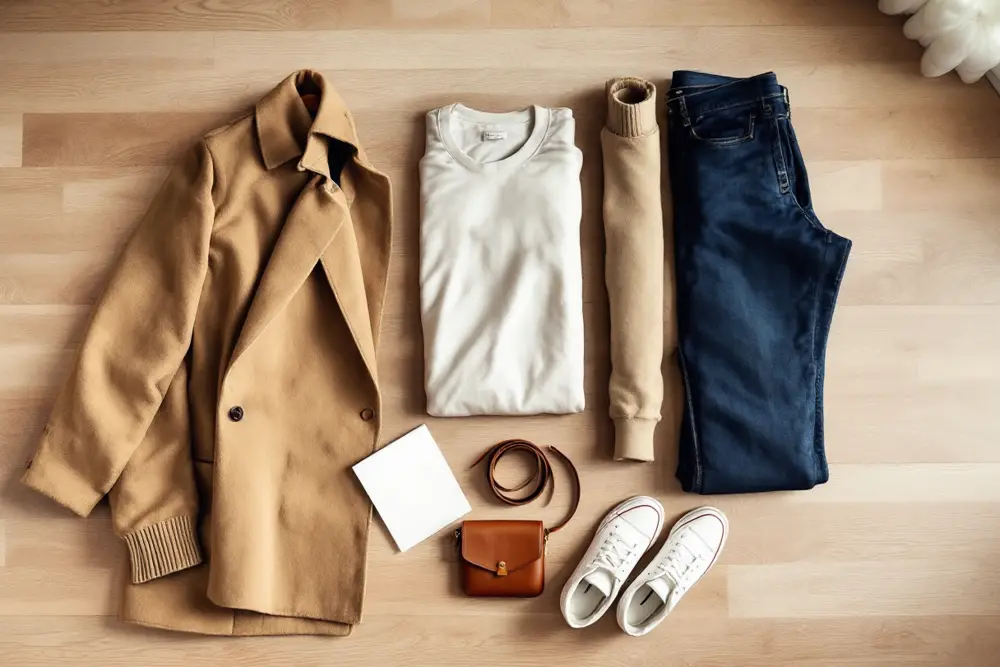
To put together an outfit, choose one main piece you want to wear, add two pieces in neutral colours and keep a single eye-catching colour. Balance a loose piece with a slimmer or straighter one, choose shoes that match how formal your plan is, and check the whole look once in a full-length mirror.
What does it mean to put together an outfit?
Putting together an outfit means choosing a top, bottom, shoes, outer layer and accessories that work as one look in colour, shape and level of formality. Unlike a suit, where the matching is done for you, the pieces of an outfit were bought separately and you are the one who connects them. That is why a good outfit rarely depends on expensive clothes; matching what you already own well is usually enough.
This guide covers the fundamentals: colour, proportion, pattern, texture, layering, shoes and accessories, plus outfit formulas you can copy. For a short, practical way to test combinations, see how to create outfits with the clothes you already own.
How to put together an outfit in five steps
The easiest way to put together an outfit is to start with one main piece and choose everything else to support it. The main piece is what you most want to wear that day: a patterned shirt, a coloured knit, trousers that fit well or a favourite jacket.
- Set the plan: where you are going, how much you will walk and what the weather is like. An office day and a dinner do not ask for the same clothes.
- Pick the main piece: for example, a green cable-knit sweater.
- Give it a calm partner: a neutral bottom such as dark indigo jeans or beige wool trousers.
- Add shoes: white leather trainers feel relaxed, while brown loafers or boots look a little more considered.
- Finish and check: add a jacket, belt, bag or watch if needed. Look at the whole outfit in a full-length mirror, then try one alternative by changing a single piece.
How to match colours in an outfit
The safest way to match colours is to build most of the outfit from neutrals and add one accent colour. Neutrals are shades that sit easily with almost anything: black, white, grey, navy, beige, cream, brown and khaki. Denim blue behaves like a neutral in practice.
A simple formula does most of the work: two neutrals and one colour. Grey trousers, a white T-shirt and a burgundy cardigan. Dark jeans, a cream shirt and a mustard sweater. Keeping the outfit to about three colours makes decisions quicker.
Tonal dressing means wearing lighter and darker shades of the same colour together: a pale blue shirt with navy trousers, or a cream knit with a camel coat. A monochrome outfit, one colour from head to toe, is the simplest version; mix fabrics so it does not fall flat.
If a colour suits your face, wear it near it, on a top or a scarf. A colour you are unsure about is lower risk on trousers, a skirt or shoes.
Which colours go together? Colour wheel and pairing chart
The colour wheel is a simple diagram that arranges colours in a circle, which makes it easier to predict how two colours will look side by side. Colours next to each other on the wheel (blue and green, red and orange) look calm together; these are called analogous colours. Colours opposite each other (blue and orange, green and red, purple and yellow) are complementary and make each other stand out. When you use opposites, keep one in a large piece and the other in a small detail, such as a navy coat with a mustard scarf.
The chart below lists easy pairings for beginners. Treat them as starting points, not limits.
| Main colour | Pairs easily with | Example outfit |
|---|---|---|
| Navy | White, cream, grey, camel, burgundy | Navy knit + cream trousers + brown loafers |
| Black | White, grey, camel, red, denim blue | Black trousers + grey sweater + white trainers |
| Grey | White, navy, black, dusty pink, burgundy | Grey sweatshirt + black jeans + white trainers |
| Beige and camel | White, cream, navy, brown, khaki | Camel coat + white T-shirt + dark jeans + brown boots |
| Khaki and olive | Cream, white, navy, brown, mustard | Olive jacket + white T-shirt + beige chinos |
| Burgundy | Grey, navy, cream, beige, denim blue | Burgundy sweater + light grey trousers + black boots |
| Denim blue | White, grey, navy, red, mustard | Light-wash jeans + mustard sweater + white trainers |
| Pastels (blush, lilac, mint) | White, cream, light grey, beige | Lilac blouse + cream trousers + beige ballet flats |
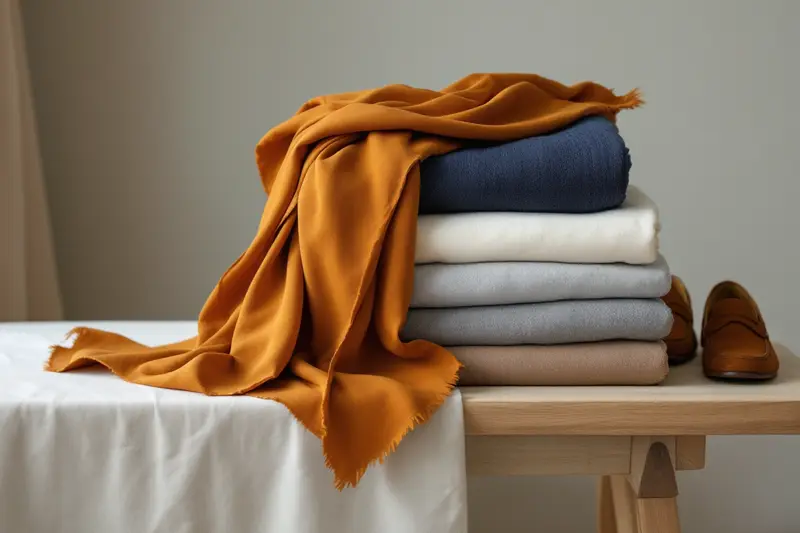
How to balance proportions: mixing loose and fitted pieces
The easiest way to get balanced proportions is to pair one loose piece with one slimmer or straight-cut piece. A silhouette is the overall outline your clothes create. An oversized sweatshirt sits well with straight or slim trousers; wide-leg trousers balance nicely with a closer-fitting T-shirt or a tucked-in shirt. Loose from top to bottom is also a valid choice; if you try it, keep the colours simple and the shoes slightly chunkier.
The waistline shapes proportion more than anything else. A full tuck, a front tuck (only the front of the shirt tucked in) or a slim belt marks the waist and lengthens the leg line, especially with high-waisted trousers.
Trousers and shoes in similar shades, such as black trousers with black boots, keep the leg line unbroken. A hem that ends at the ankle or rests lightly on the shoe looks neat in most cuts. Use these ideas according to how you want to look; none of them is compulsory.
How to mix patterns and textures
The simplest pattern rule for beginners is one patterned piece per outfit, with everything else plain. A checked shirt works easily with plain navy trousers, and a floral skirt with a plain white T-shirt. Repeating one colour from the pattern in another piece ties the outfit together, like a navy and white striped top with navy trousers.
If you want to wear two patterns, make their scale different and let them share a colour: a fine-striped shirt under a large-check jacket looks intentional because the patterns do not fight.
Texture is the surface of a fabric, and it is the easiest way to bring a one-colour outfit to life. A chunky knit with smooth wool trousers, a leather jacket with a cotton T-shirt, or a satin blouse with jeans all balance each other. In an all-grey outfit, let one piece be wool, one cotton and one leather.
How to layer clothes without looking bulky
Layering means wearing thin pieces on top of each other to adjust warmth and add depth to an outfit. The basic order runs from the inside out and from thin to thick: a T-shirt or shirt, then a knit or cardigan, then a jacket, trench coat or overcoat on the outside.
Different lengths make layers look organised: a jacket slightly longer than the sweater beneath it, or a shirt collar just showing above a crewneck. Keeping layers in one colour family, such as cream, beige and brown, is the safest route; if you want a coloured layer, make it just one piece.
Layers are useful between seasons because you can take them off during the day. For cold-weather work combinations, see winter office outfits.
How to choose shoes and a bag for your outfit
Choose shoes according to how formal the outfit is, because shoes change the mood of an outfit faster than any other piece. The same dark jeans and white shirt look relaxed with white trainers, more polished with brown loafers and closer to evening with black ankle boots.
A few versatile pairs are enough to start: plain white trainers, brown or black loafers or derbies, and a pair of boots. Women may add flat ballet shoes or a low heel. Those four or five pairs cover most plans from weekends to work.
Your bag and shoes do not have to be the same colour, but keeping them in the same colour family helps: tan, camel and brown sit together, as do black, grey and charcoal. Matching a leather belt to leather shoes looks tidy in classic outfits; casual outfits give you more freedom.
How many accessories should you wear?
A good starting point is one standout accessory, with the rest kept simple. If you wear a bold necklace, keep earrings small; with a patterned scarf, choose a plain bag. For men, a watch, belt, glasses and a scarf are usually enough. If you are just starting, one metal tone for buckle, watch and jewellery looks most coherent.
Accessories are the cheapest way to change a simple outfit. Black trousers and a white shirt look different with a fine necklace one day and a patterned silk scarf or coloured bag the next.
Outfit formulas for casual, work and evening
An outfit formula is a repeatable combination of piece types, such as jeans + plain tee + jacket + trainers, that you can fill with different clothes. Changing the situation usually means keeping the base and swapping the shoes, outer layer and fabric. Casual outfits put comfort first; work outfits suit tailored trousers, a shirt or fine knit and closed shoes (more in office outfit ideas); for an evening, darker tones, a little sheen or soft textures such as satin, velvet or fine wool are enough.
A popular shortcut is the third piece rule: a top and a bottom plus one extra piece, such as a jacket, cardigan or scarf, which tends to make an outfit look finished. For plans in between, smart casual is a useful idea to know. Use the table as a guide and try the closest pieces you own.
| Occasion | Example for women | Example for men |
|---|---|---|
| Casual weekend | Light-wash straight jeans, white T-shirt, beige knit cardigan, white trainers | Dark jeans, grey sweatshirt, khaki field jacket, white trainers |
| Coffee, errands, campus | Wide-leg jeans, navy and white striped top, beige trench coat, trainers | Beige chinos, navy polo shirt, brown suede trainers |
| Work, office | Grey tailored trousers, cream blouse, navy blazer, black loafers | Grey wool trousers, white shirt, navy merino crewneck, brown derbies |
| Dinner | Black satin midi skirt, fine black knit, heeled ankle boots, small shoulder bag | Black trousers, burgundy fine-knit roll neck, black leather Chelsea boots |
| Travel, long walks | Khaki cargo trousers, white T-shirt, denim jacket, cushioned trainers | Navy joggers, white T-shirt, light rain jacket, cushioned trainers |
Common mistakes when putting an outfit together
When an outfit feels slightly off, the cause is usually one of the points below. Each can be fixed with a small change.
- Too many statement pieces: coloured trousers, a patterned shirt and a big accessory compete with each other. Pick one and simplify the rest.
- Clothes that do not fit: a jacket hanging off the shoulders or hems dragging on the floor overshadow the best colour match. Taking up a hem is often a simple fix.
- Leaving shoes until last: worn-out trainers with a polished outfit, or very formal shoes with a relaxed one, upset the balance.
- Fabric that does not suit the plan: a casual cotton T-shirt at a wedding, thin-soled shoes on a long walking day. Check the plan first.
- Matching everything exactly: a bag, shoes, belt and necklace in identical colours can look stiff. Coordinated is enough.
- Checking only the top half: look at yourself head to toe in a full-length mirror, then sit down, stand up and walk a few steps.
How to mix and match clothes to make more outfits
The way to get more outfits from fewer clothes is to choose neutral basics that pair easily and leave colour and pattern to smaller pieces. Three bottoms and four tops that all go together already give you twelve combinations before you count shoes and outer layers.
A useful core for most people: dark jeans, neutral tailored trousers (black, grey or beige), a white and a black T-shirt, a white or light blue shirt, a neutral knit, a jacket or blazer, a coat for the season and two or three versatile pairs of shoes. Women may add a plain dress or skirt. To build this more systematically, see how to build a capsule wardrobe.
Kulis can help at this stage. It builds a digital wardrobe from photos of your clothes, and when you choose a plan such as Everyday, Work or Dinner under ‘What's the plan?’, it suggests outfits from the pieces you saved. You can change any piece you do not like, see them together on a mannequin and save the combinations that work.
Frequently asked questions
What is the third piece rule in fashion?
The third piece rule says that a top and a bottom become a finished outfit when you add one more piece on top, such as a jacket, blazer, cardigan, waistcoat, overshirt or scarf. Shoes are usually not counted. Jeans and a white T-shirt look simple on their own; adding an olive field jacket or a camel cardigan makes the same base look more considered.
How many colours should you wear in one outfit?
Three colours is a good limit when you are starting out: two neutrals and one accent, such as navy trousers, a white shirt and a mustard sweater. Because neutrals like black, white, grey, beige and denim blue do not look busy, four colours can also work. If you use two strong colours, put one of them in a small piece such as a bag or scarf.
Can you wear black and navy together?
Yes. Black and navy are both dark neutrals and look calm and tidy together, such as a navy sweater with black trousers or a black coat with dark jeans. Choosing different fabrics, like a wool knit with smooth trousers, makes the pairing look intentional. Because the two shades can blur under artificial light, check the outfit once in daylight.
Do brown and black go together?
They can. Black trousers with brown boots, or a black sweater under a camel coat, look warm and modern. Very dark brown next to black can look like a near miss, so a lighter brown such as camel or tan makes the contrast clear. Repeating the same brown in a belt and shoes ties the outfit together.
Can you wear two patterns at once?
Yes, and it is easier when the patterns differ in scale. A fine-striped shirt with a large-check jacket, or a small polka-dot blouse with a wide-striped skirt, will not overpower each other. A shared colour between the two patterns links them. If the rest of the outfit, meaning the trousers, shoes and bag, stays plain, the look will not feel crowded.
Do your shoes and bag have to match?
No. An exact match is a classic approach and still looks neat, but staying in the same colour family is enough today. Tan shoes with a camel bag, or black boots with a grey bag, look coordinated. Using the bag as the outfit's accent colour is another good option: a red or green bag with an otherwise neutral outfit looks intentional even when it does not match the shoes.
How do I know if my outfit matches?
Look in a full-length mirror and ask three questions. Is only one piece trying to grab attention? Do the colours come from a few families, with no more than one strong accent? Does a loose piece have a slimmer or more structured partner? Then check that the shoes suit how formal the plan is. If something still feels off, change one piece at a time.
Adapt these starting ideas to your plans, comfort and personal style.
Get Kulis